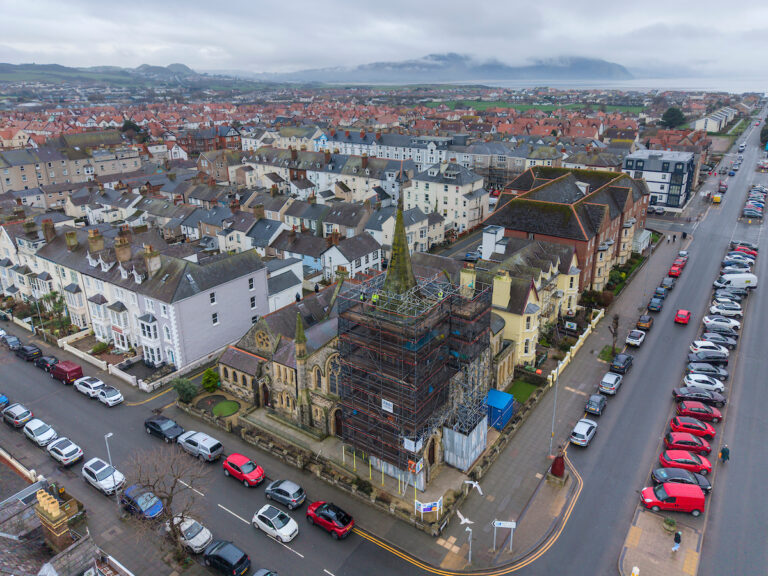
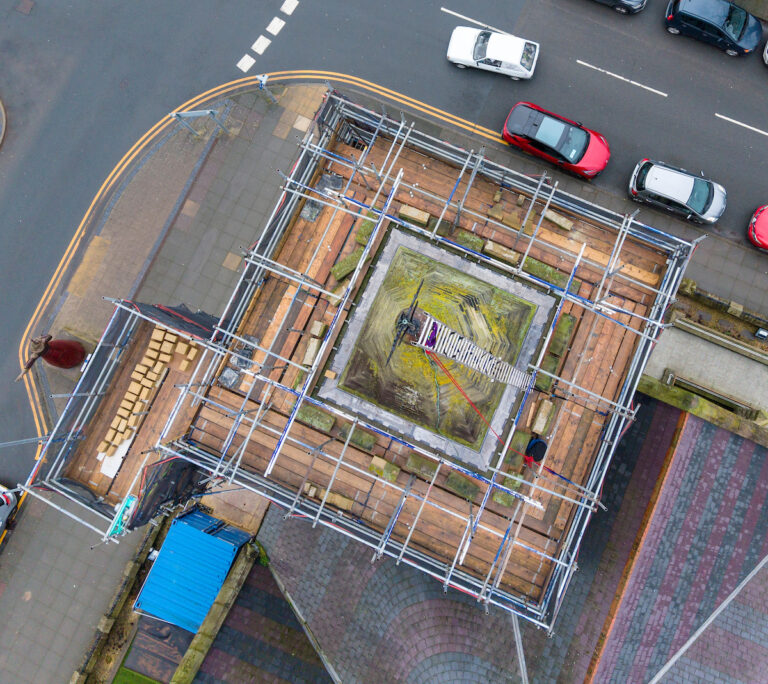
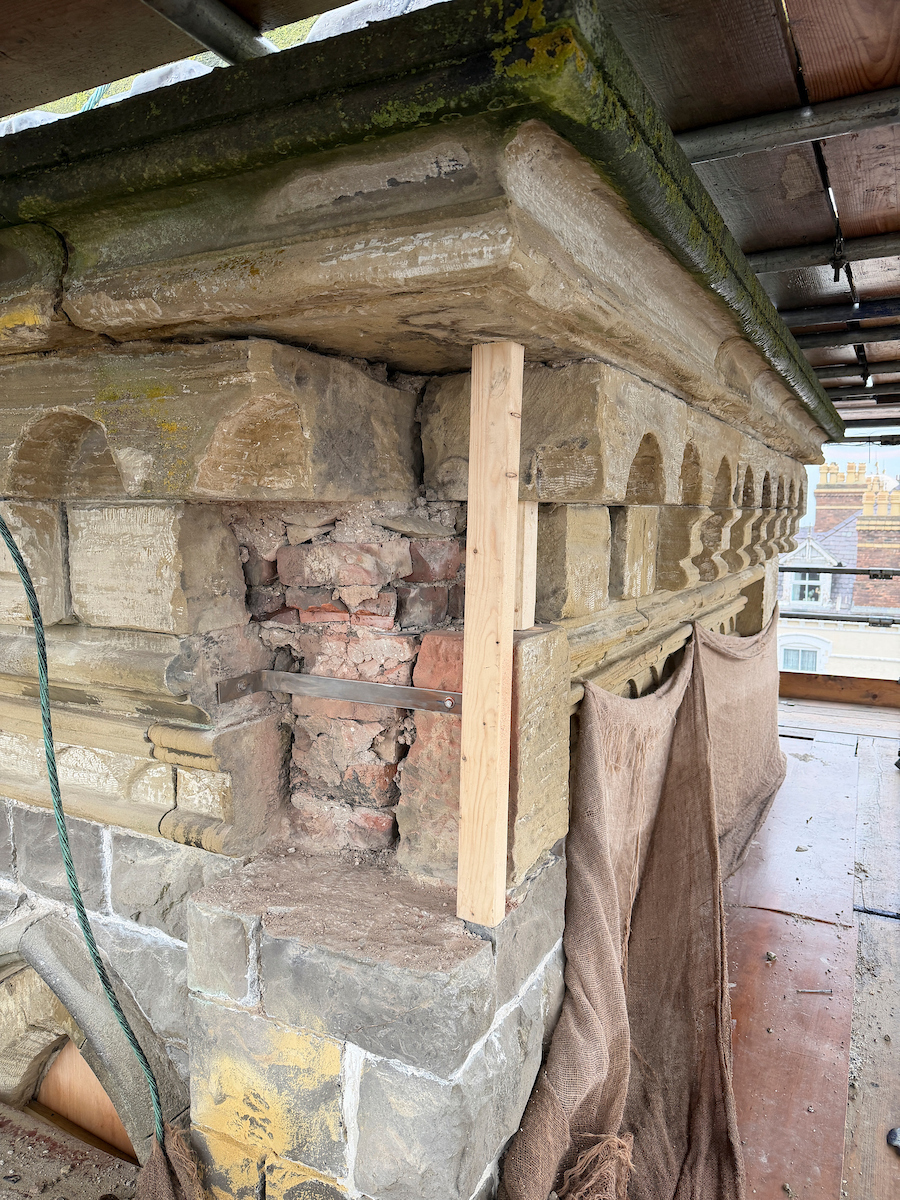
Since our initial investigations, the focus has been on addressing long-standing defects uncovered at parapet and cornice level. Rusting iron fixings and cramps have now been carefully removed where they were found to be expanding and causing damage to the surrounding masonry. This process has required controlled dismantling, close recording and a measured approach to ensure the stability of adjacent stonework.
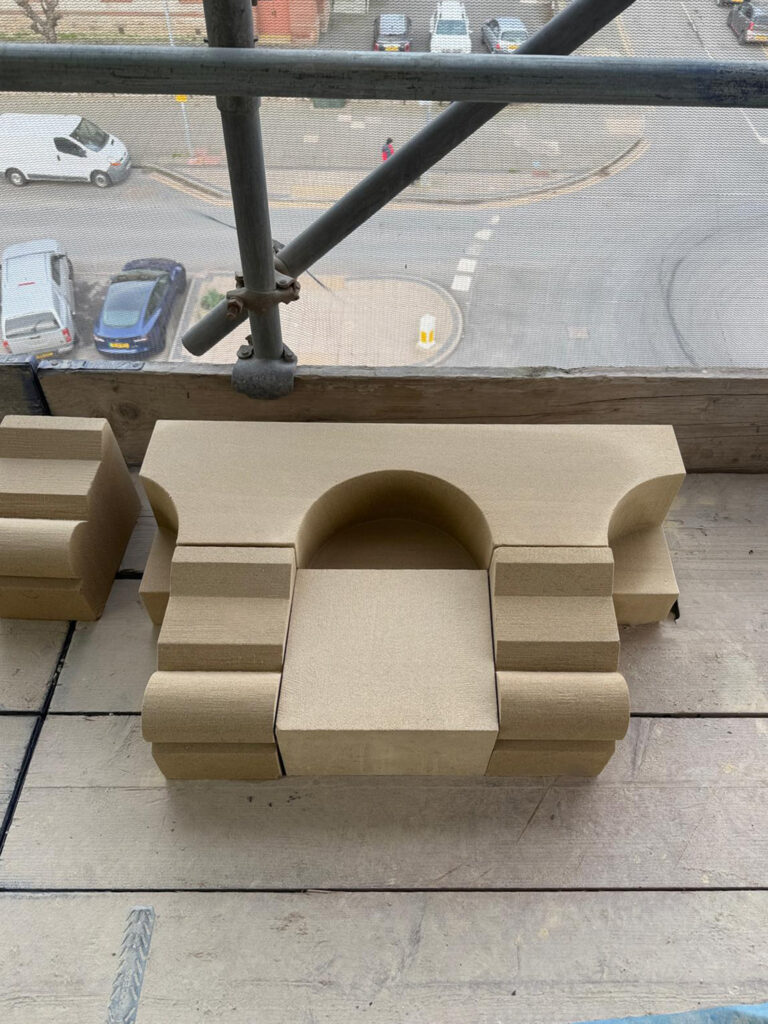
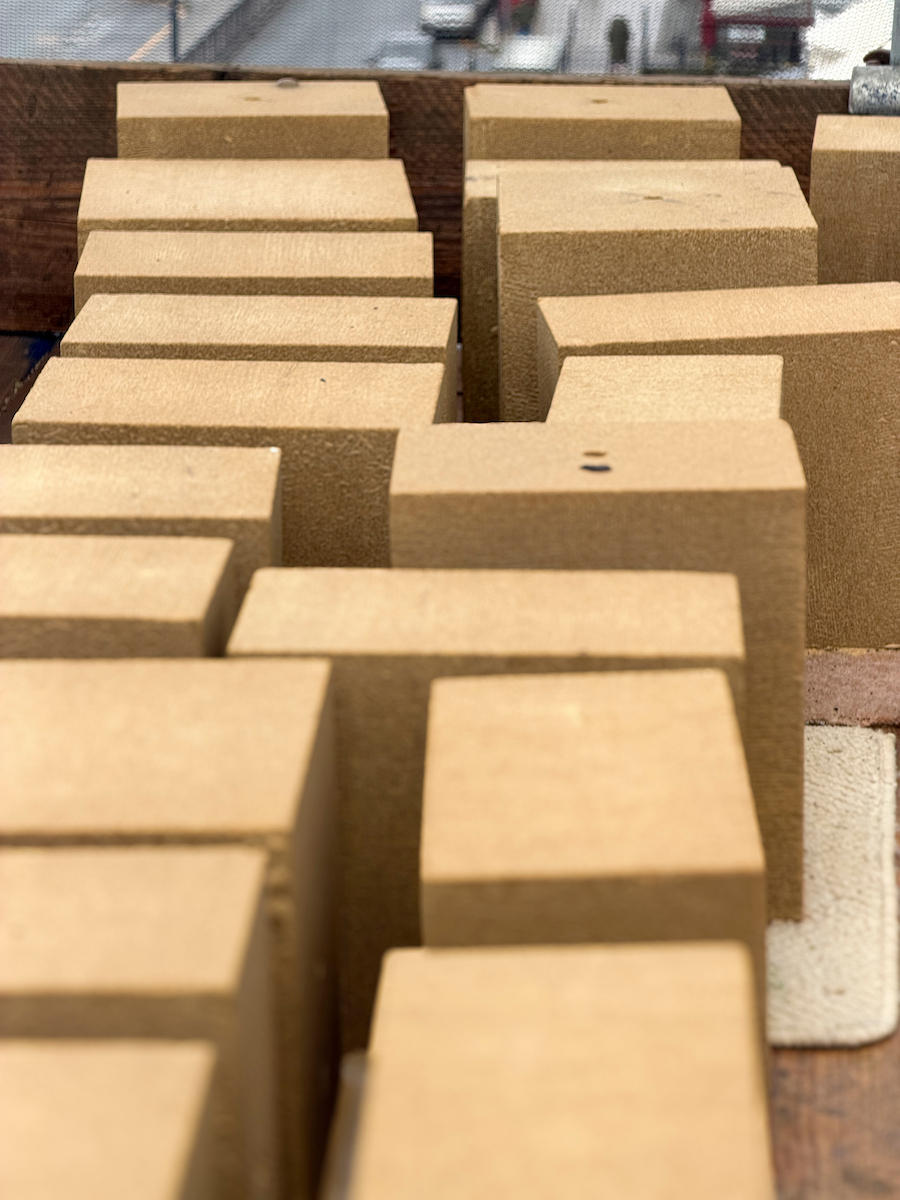
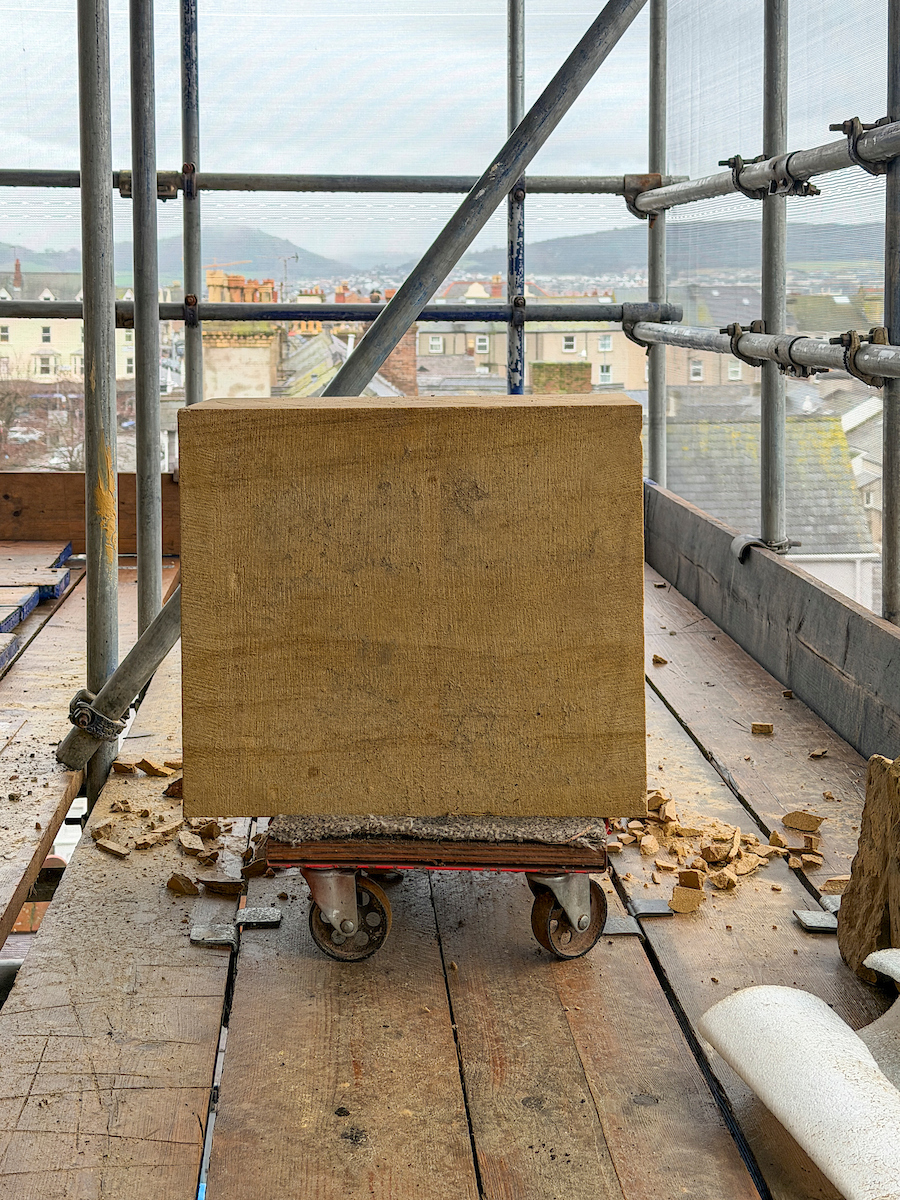
Replacement masonry is being introduced where necessary, with new stone worked to accurately match the existing profiles. All rebuilt sections are being secured using stainless steel fixings, removing the risk of future corrosion while maintaining the original form and detailing of the tower.
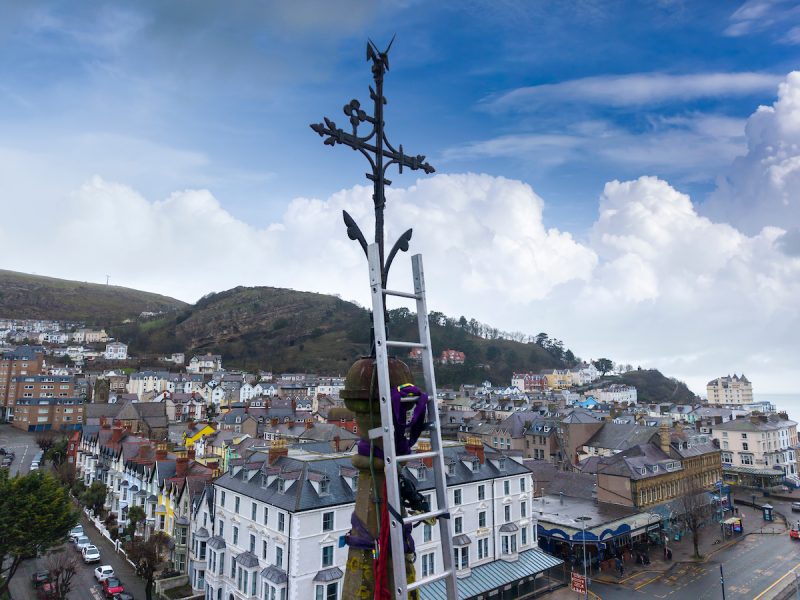
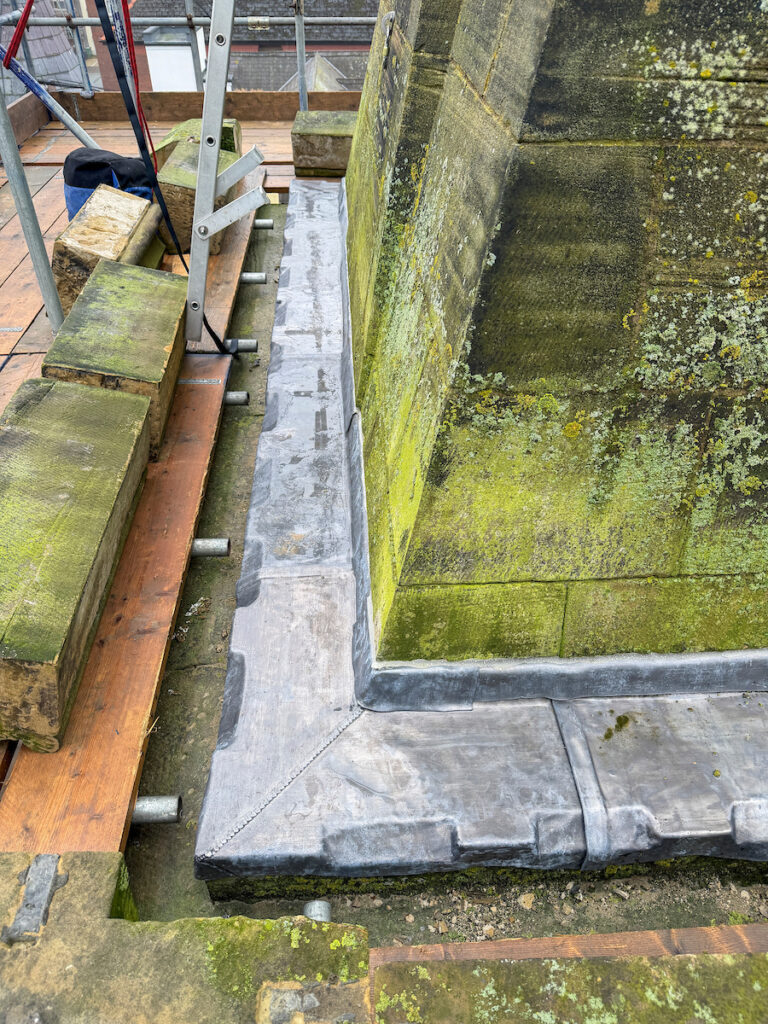
Leadwork repairs to gutters and key junctions are also underway, improving rain-water management at high level and helping to protect the structure below. At the very top of the spire, specialist access has allowed inspection and repair of the finial cross – a demanding but essential part of the works, given both its height and exposure.
These repairs are about safeguarding the long-term performance of a landmark structure that can be seen from miles around. By addressing the causes of decay rather than just the symptoms, the work helps ensure Gloddaeth Church continues to hold its place in the townscape for many years to come.