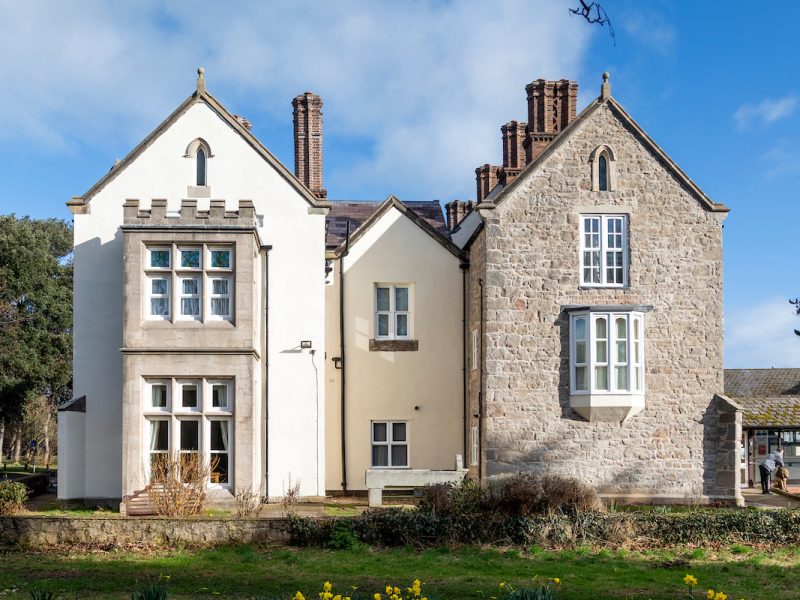
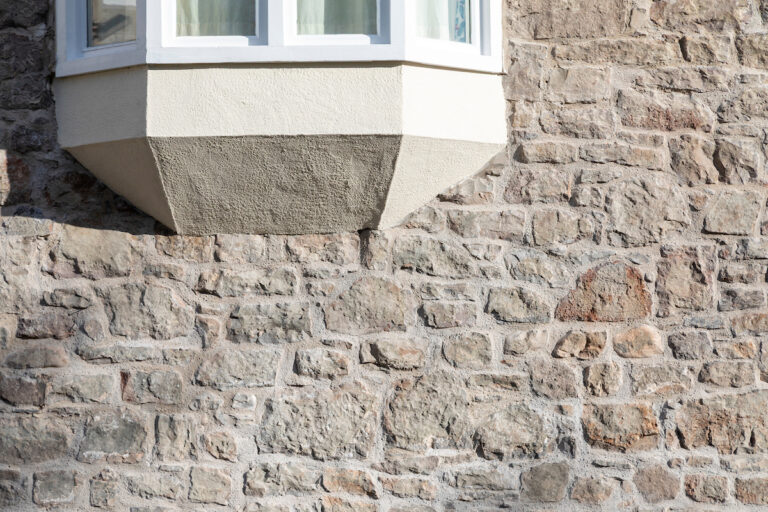
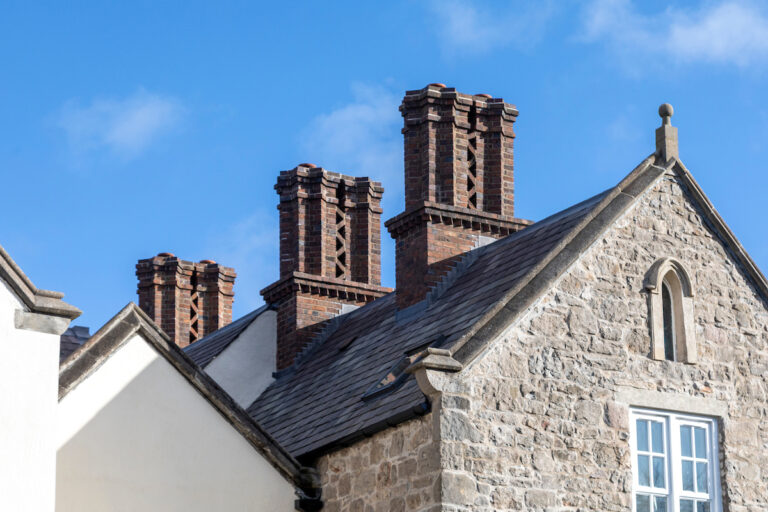
At Pentre Mawr House in Wales, R Moore Building Conservation have recently completed an extensive lime mortar project, rendering above the parapet on the south elevation, a significant wall on the north elevation, and carefully pointing the remaining stone walls. This approach not only respects the historic fabric of the building but ensures its long-term stability.
Lime mortar’s true strength lies in its sacrificial nature. Unlike modern Portland cement, which is harder than the bricks or stones it binds, lime mortar is softer. This means that during freeze-thaw cycles, where trapped moisture expands and contracts, the mortar takes the stress—rather than the brick or stone—preventing irreversible damage.
Another remarkable property of lime mortar is its ability to self-heal. It wicks moisture, redistributing and reabsorbing calcium carbonate over time to fill small cracks and irregularities beneath the surface. But perhaps the most crucial aspect of lime-based mortars is their breathability. A lime-pointed or lime-rendered building is able to release moisture naturally, preventing trapped damp that can lead to deterioration.
This principle has been at work for centuries. It’s known that medieval lime mortars have allowed historic buildings—such as cathedrals—to subtly shift and reposition themselves over time, accommodating movement and adapting to the natural settling of their foundations. This inherent flexibility has helped these structures withstand the test of time, preserving them for future generations.
By using lime mortar at Pentre Mawr House, our team has not only ensured the building’s longevity but also upheld a traditional craft that has protected historic buildings for centuries.