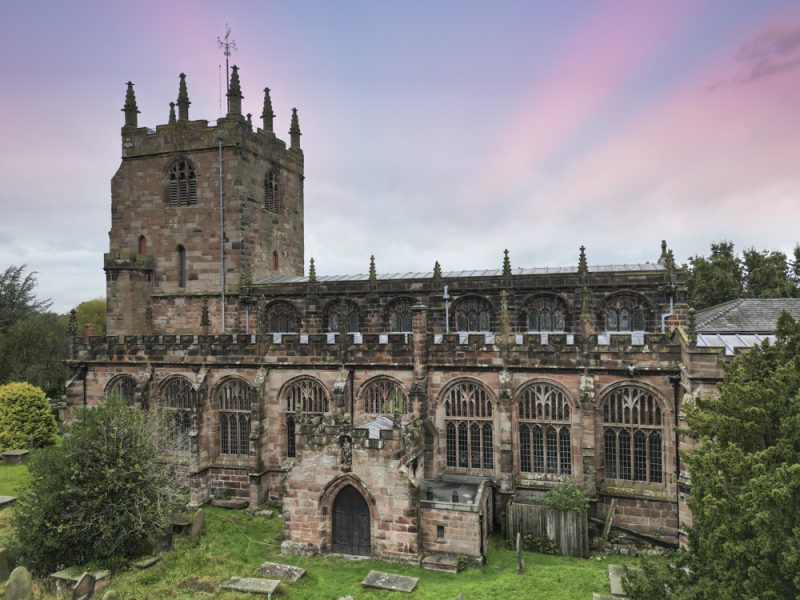
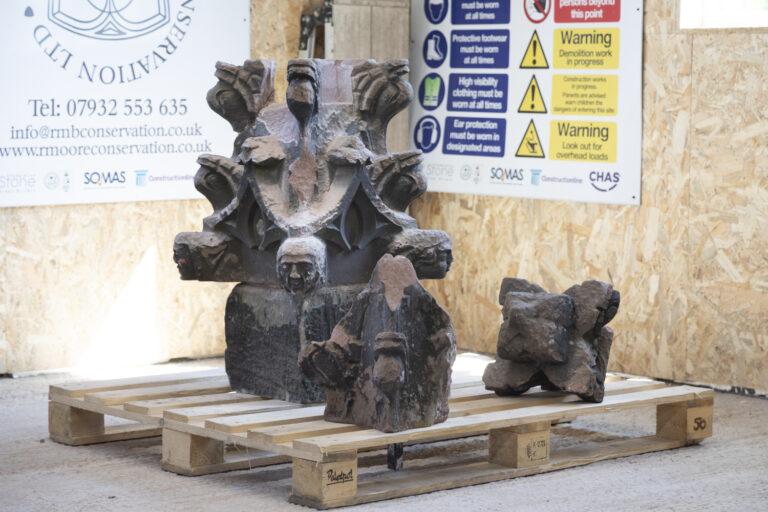
The 14th- and 16th-century church of St Boniface in Bunbury, Cheshire, is adorned with decorative sandstone pinnacles that taper into a sculpted flourish. The curled details rising up the sides of the pinnacles are called cusping, often depicting floral themes or even sculpted faces. But pinnacles are far more than decorative. These weathered stone features play a vital role in keeping the structure beneath them steady—an unseen force anchoring the church to the ground.
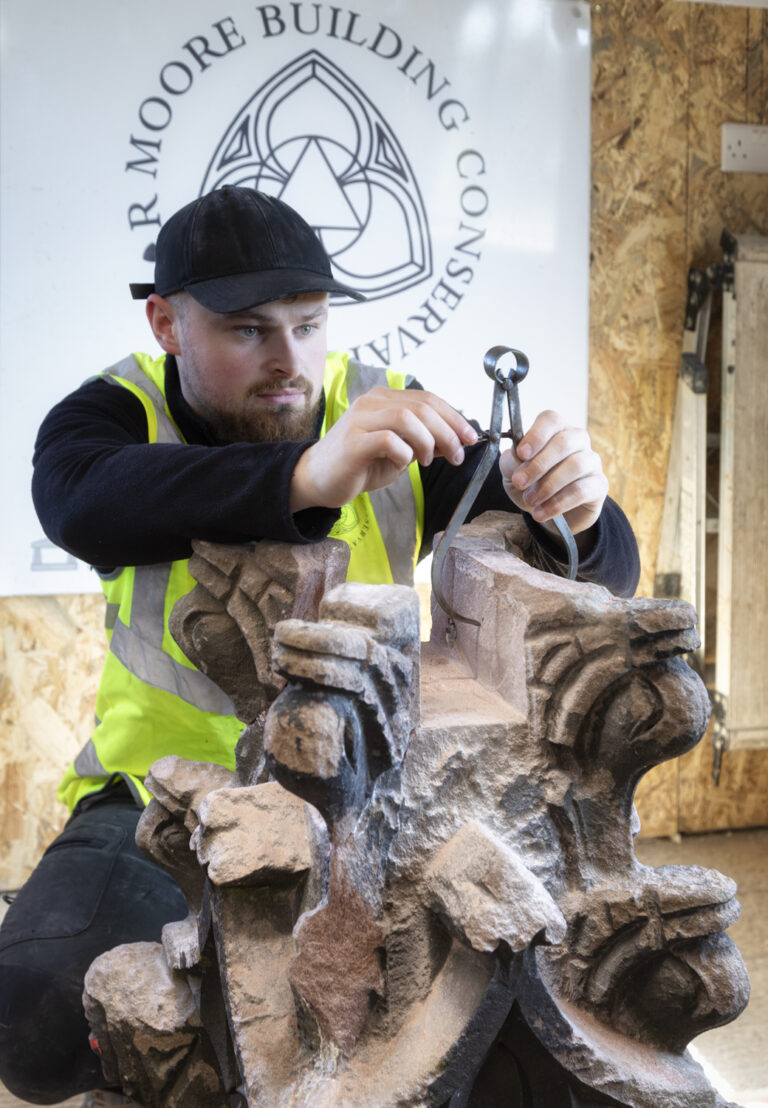
Recently, one of the pinnacles was damaged, and our stonemason at R Moore Building Conservation is painstakingly restoring it, piece by piece. Like a jigsaw puzzle, broken fragments are carefully pinned back together, and missing details are re-sculpted by hand. It may seem like a small job, but sometimes the smallest interventions help keep a building structurally sound.
That’s why we never overlook the quiet, careful work that keeps history standing. In conservation, as in nature, it’s often the smallest actions that make the biggest difference.
Our approach is one of minimum intervention—preserving as much of the original fabric as possible, ensuring continuity while allowing the marks of time to remain. This quiet, patient work is not just about conservation; it’s about sustainability. By repairing rather than replacing, we reduce waste, safeguarding both the past and the planet.
Our stonemason’s craft, like the pinnacle itself, is an invisible force, silently holding ancient places like Bunbury together. It’s slow, meticulous, and sometimes unforgiving work, but that’s the nature of true conservation—eat, sleep, conserve, repeat.