
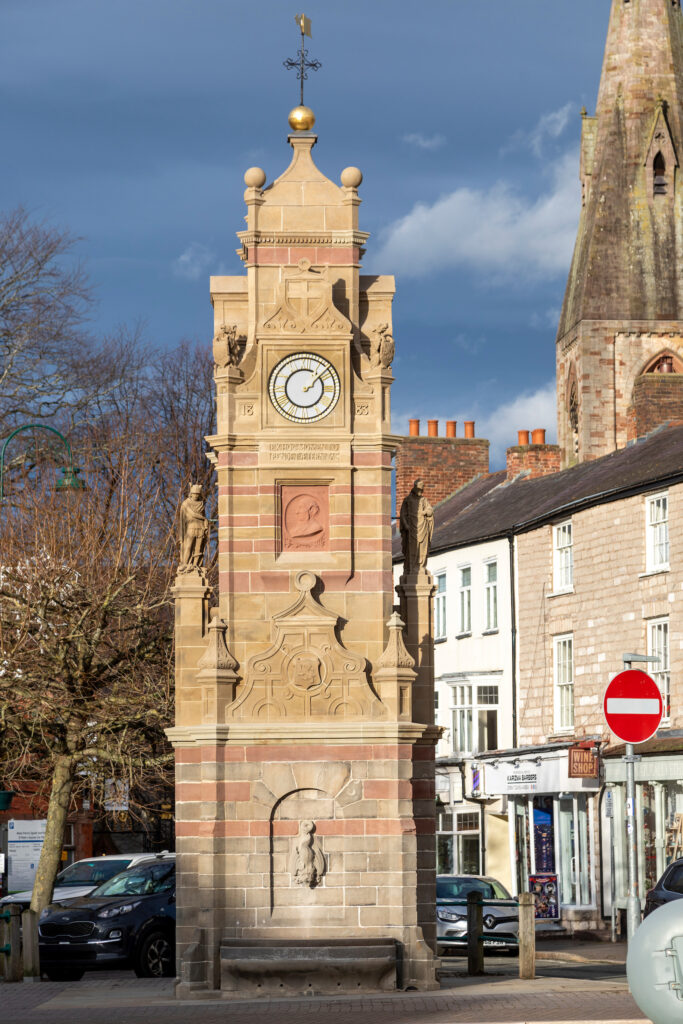
R. Moore Building Conservation Ltd. undertook a comprehensive restoration of the Ruthin Clock Tower, also known as the Peers Memorial, located in St. Peter’s Square, Ruthin. Erected in 1883 to honour Joseph Peers, the esteemed Clerk of the Peace for Denbighshire, this Gothic-style monument was designed by the renowned Victorian architect John Douglas. Beyond its timekeeping role, the clock historically regulated the gas supply for the town’s streetlights, underscoring its significance in Ruthin’s heritage.
The restoration project aimed to address significant conservation challenges, including stone deterioration and structural wear, to preserve the clock tower’s historical and architectural integrity. Key interventions involved the careful replacement of severely weathered stone sections with high-quality materials, ensuring both durability and aesthetic harmony with the original structure. Additionally, the project encompassed the restoration of intricate architectural details, such as the ornate cornices, to their former splendour.
Ruthin Clock Tower Restoration Committee, Clocaenog Wind Farm Community Fund, Denbighshire County Council, Ruthin Town Council, National Lottery Heritage Fund, PEGW Architects.
10 Months
The restoration commenced in March 2023 and reached completion in December 2023, spanning approximately 10 months. This timeline included meticulous planning, conservation work, and final inspections to ensure the highest standards of restoration were achieved.
Upon Application.
The restoration required a multidisciplinary approach, engaging experts in:
Stone masonry: Skilled craftsmen executed the delicate task of stone replacement and repair, ensuring fidelity to the original Gothic design.
Structural engineering: Engineers assessed and addressed any underlying structural issues to ensure the monument’s stability and longevity.
Metalwork and metal gilding: Restoration of ball finial and creation of a new weather vane. Gilding of ball finial.
Stone Cleaning: – which systems used on this site?
Lime mortar pointing: – a bit about the mortar type and method used.
Clock Repairs: – what was done?
Community involvement was a cornerstone of the project. In March 2023, Director Rory Moore, alongside Fiona Gale (Chair of the Clock Tower Restoration Committee) and Conservation Architect Elinor Gray-Williams, presented the project’s progress to a packed audience at the Old Courthouse in Ruthin. This event fostered transparency and strengthened the bond between the restoration team and local residents.
The successful restoration of the Ruthin Clock Tower stands as a testament to the effectiveness of collaborative conservation efforts. By uniting skilled professionals, dedicated community members, and supportive funding bodies, the project not only preserved a significant historical landmark but also revitalised a symbol of Ruthin’s rich heritage for future generations to appreciate.